Free Generative AI Training 2026: Learn at No Cost

The economic impact of technology on our pockets has never been as evident as it is now, especially when it comes to retraining our professional profile without spending our life savings. The recent free generative AI training initiative launched this October by the University of Valencia marks a turning point in access to advanced technological knowledge. While specialized master's degrees in the private sector easily exceed three thousand euros, this type of public proposal democratizes access to the labor market of the future. In this article, we will analyze not only the news itself, but also the financial background, the savings it represents for students, and common mistakes when choosing where to study.
The urgency to master natural language tools and data processing is no longer an exclusive option for engineers or computer scientists. Any professional, from the legal sector to digital marketing, needs to understand how these models work in order not to become obsolete in their job. However, the cost of teaching materials, software licenses, and private online academies usually poses an insurmountable barrier for thousands of families. We will break down the hidden costs of technology training, compare alternatives, and show you how to make the most of these academic opportunities without putting your household finances at risk.
What the video covers
The audiovisual document accompanying this training movement details how public institutions are redirecting their budgets toward massive digitization. The video explains that the workshops are not limited to basic theory, but address practical cases of administrative task automation, corporate report writing, and data analysis using advanced virtual assistants. The speakers emphasize that the main objective is to provide students with a real competitive advantage from the first day of class, reducing the digital divide that separates traditional professionals from digital natives.
Likewise, the audiovisual piece emphasizes the chosen teaching methodology, combining classroom sessions with virtual laboratories accessible from any computer or mobile device. It is highlighted that places are limited due to high demand, which has generated a race against the clock among enrolled students to secure their registration before available quotas run out. The experts participating in the video point out that mastering these tools can mean a salary increase of up to fifteen percent in the first twelve months after finishing the course.
Another fundamental aspect addressed by the visual content is the public-private partnership underlying the project. Several technology companies in the software sector provide free educational licenses so that students can experiment with professional versions of the most powerful language models on the market. This prevents students from having to pay monthly subscriptions of twenty or thirty euros out of their own pockets during the school term, considerably alleviating the financial burden of studying today.
The economic impact of not training in artificial intelligence
The opportunity cost of ignoring the current technological revolution can be measured in thousands of euros annually in lost purchasing power. The most recent market studies indicate that workers who do not incorporate automation into their daily tasks take twice as long to complete reports, assist clients, or analyze business metrics. In such a competitive work environment, operational slowness translates directly into poorer performance evaluations and a lower probability of opting for promotions or salary increases. Therefore, looking for alternatives for free generative AI training is not a cultural whim, but an imperative financial necessity.
In addition, paying for low-quality courses in online academies without official accreditation represents a capital flight that many family economies cannot afford. It is common to find ads on social media promising to become an artificial intelligence expert in just three weekends in exchange for six hundred euros. The vast majority of these syllabi are compilations of free information available on the internet that lack real teaching support or applied case studies. Taking advantage of public university initiatives completely eliminates this financial risk, guaranteeing a rigorous quality standard endorsed by active doctors and professionals.
To calculate real savings, just look at the rates of private business schools. An intensive prompt engineering and automation course in the private sphere is around fifteen hundred euros, a prohibitive figure for a university student or young unemployed person. By receiving this free generative AI training through public channels, the user retains that money in their checking account, being able to allocate it to essential expenses such as rent, transportation, or hardware tools necessary for teleworking. The difference between paying and receiving subsidized education marks the fine line between indebtedness and financial stability.
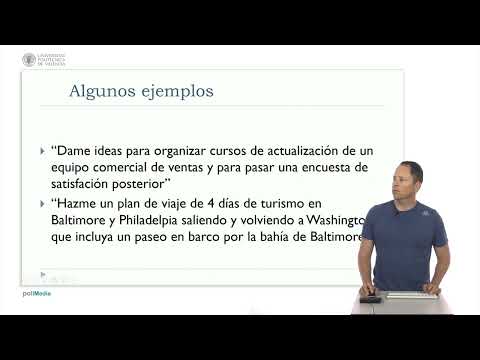
What the video covers
In this video (Free AI Training - UCAM HITECH) the essentials of the topic are explained visually. In summary: Are you interested in these Digital Marketing and Artificial Intelligence courses? To register, check the link in UCAM's bio ......
Comparison of training options and associated costs
To better understand the value of the offer launched by the University of Valencia this October, it is useful to examine the different avenues available in the current market to acquire skills in artificial intelligence. Below, we present a detailed table comparing the costs, level of demand, and advantages of each alternative:
| Training Model | Estimated Cost | Level and Validity | Savings / Profitability |
|---|---|---|---|
| Public universities (Current initiatives) | 0 euros | Official / Practical | Maximum savings (1,500€ average) |
| Private online academies | 600€ - 2,000€ | Private / Variable | Low return if content is basic |
| Free tutorials on YouTube and blogs | 0 euros (high time cost) | Uncertified / Informal | Requires extreme self-discipline |
| Official university master's degrees in AI | 3,000€ - 9,000€ | Higher degree | Long-term investment for senior profiles |
As can be seen in the table, free generative AI training promoted by academic institutions offers the perfect balance between zero cost and institutional validity. While loose tutorials on the internet lack pedagogical structure and official master's degrees entail an unaffordable outlay for the majority, these intensive October workshops are positioned as the smartest option from the point of view of economic performance.
Data analysis shows that students who opt for structured programs at no cost reduce their learning curve by forty percent compared to those who try to learn autodidactically without professional guidance. Time is money, and having a faculty that resolves doubts live prevents hours of frustration in front of the screen trying to correct code errors or flaws in writing instructions for generative models.
Steps to access subsidized programs
Enrolling in these calls requires following a series of methodical steps so as not to miss the opportunity due to high competition for places. First, it is essential to review the official calendar published on the institutional portals of the organizing university during the first weeks of September and October. Many of these courses open a pre-registration period of barely seventy-two hours, so advance preparation and speed in the digital process are decisive to secure a seat.
Second, supporting documentation must be prepared to demonstrate ties to the university community, either through a valid student ID, enrollment certificate, or public employee number. Administrative automation platforms usually reject incomplete applications automatically, leaving unprepared candidates out. It is advisable to have all required documents digitized in PDF format before the registration link officially opens.
Finally, once admitted, it is vital to plan the weekly schedule to combine theoretical classes and practical laboratories with the rest of academic or work obligations. Although free generative AI training does not involve a monetary outlay, it requires a commitment in hours of dedication that must be strictly met to pass the final evaluation tests and obtain the corresponding certifying certificate that will add points in future job selection processes.
Common mistakes when looking for artificial intelligence courses
One of the most frequent mistakes users make when starting out in this field is falling into the trap of fake official degrees. There are numerous platforms on the net that use names similar to prestigious universities to sell very expensive courses that have no real academic recognition. Before entering your credit card details or compromising your savings, always verify the official web domain of the institution backing the program and look for educational quality accreditation seals.
Another common flaw is underestimating the speed of obsolescence of syllabi in the technology sector. A course recorded in 2024 or 2025 on generative artificial intelligence may be completely outdated today due to the constant appearance of new multimodal models and changes in platform usage policies. For this reason, recent initiatives like the one at the University of Valencia this October are so valuable, as they update their thematic contents quarter by quarter to reflect the latest market advances.
Finally, many students make the mistake of focusing solely on the theoretical part without practicing in real environments. Reading books on neural networks or watching lectures without opening a workspace and writing practical commands is of little use when facing a real work environment. Free generative AI training must always include laboratories where real business cases are executed, allowing mistakes to be made in a controlled environment without negative economic consequences for the student.
Practical tips to maximize economic performance
Making the most of a scholarship or free course requires a clear resource-utilization strategy. We recommend following these tips to make your investment in time as profitable as possible:
Create your own prompt repository: Save every successful instruction you use during practice to reuse in your future professional projects without having to start from scratch.
Take advantage of software licenses: Use the corporate or educational accounts provided by the training center to experiment with paid tools without spending your own money.
Form multidisciplinary study groups: Combine technical profiles with humanities profiles to understand how to apply artificial intelligence in different market niches.
Participate in discussion forums: Resolve your doubts with teachers and peers; the networking generated in these courses is usually worth as much as or more than the academic certificate itself.
Update your resume immediately: Add the new skills acquired as soon as you pass the course to start receiving better-remunerated job offers in the sector.
Implementing these recommendations will allow you to transform a simple free course into a real professional springboard, optimizing every minute invested in your digital education.
Conclusion and personal perspective
In short, the commitment to free generative AI training shows that the democratization of technological knowledge is possible when public institutions correctly channel their resources toward society. In a context where inflation and the cost of living penalize family savings, avoiding spending thousands of euros on inefficient private academies provides undeniable financial relief. My personal opinion is that this type of initiative should be massively replicated in all universities in the national territory to prevent the economic divide from becoming an insurmountable barrier for the talent of the future.
Technology advances at a dizzying pace and staying on the sidelines is no longer a viable option for any professional aspiring to improve their working and salary conditions. Taking advantage of the opportunities that arise every October in the public academic sphere is the smartest, safest, and most economical way to shield your employability against the challenges of global automation. The future belongs to those who know how to learn, unlearn, and relearn without their pockets suffering in the attempt.
Read more
- Discover the latest trends in artificial intelligence tools for professionals
- How to automate repetitive tasks and save time in your job
- Definitive guide to choosing a technological master's degree without falling into financial scams
Frequently asked questions
How much does the university's free generative AI training cost?
This free generative AI training has no economic cost for members of the university community. It is financed with own and European funds earmarked for digitalization, representing direct savings of more than one thousand euros compared to similar private postgraduate degrees in the current market.
Who can access these artificial intelligence courses?
The programs are primarily aimed at enrolled students, teaching and research staff, and administrative and services staff of the Valencian academic institution. In many cases, extraordinary spots are being opened for alumni and other groups interested in updating their professional profiles this year.
Do I need to know how to program beforehand to participate?
It is not mandatory to have advanced programming or software development knowledge. The syllabi are designed from a zero level to professional practical applications, allowing anyone to master tools like ChatGPT, Claude, or image generators without prior experience.
What job opportunities does this non-degree qualification offer?
Although these are short specialization courses, the demand for profiles that know how to correctly use generative artificial intelligence has driven salaries up by twenty percent. Companies are looking for candidates capable of writing complex prompts and optimizing daily workflows.